
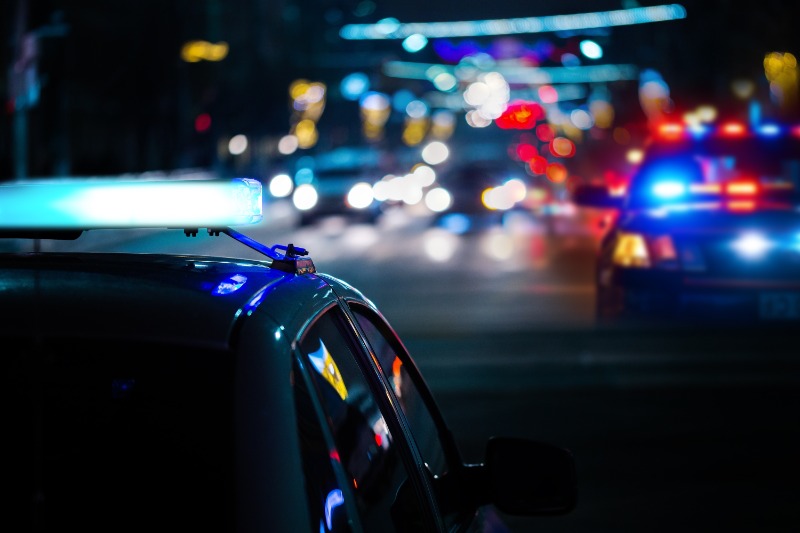
As you are driving along I-64 in Norfolk, minding your own business, you see a police cruiser in your rearview mirror. As the police car gets closer, the sirens come on and the officer pulls you over and issues you a speeding citation.
If you are like most people, you are upset, frustrated, and angry. The expenses related to a speeding ticket are significant—fines, points on your license, and insurance rate increases. However, you can fight a speeding ticket and win.
If you were pulled over for speeding, contact our Virginia traffic violations lawyers at Tavss Fletcher today. We’re here to help you fight your speeding ticket.
How Does Police Check Your Speed in Virginia? Key Facts
Not every speed check holds up to scrutiny. Here’s how police check your speed in Virginia and where those methods can go wrong.
Key Takeaways
- Police most commonly check your speed using a radar gun, a LiDAR (laser) gun, or pace clocking, where an officer follows your vehicle at a set distance and reads their own speedometer.
- Radar guns rely on the Doppler effect, while LiDAR guns use laser pulses to target a specific vehicle in traffic, even in heavier traffic conditions.
- Pace clocking is commonly used but can be inaccurate if the officer doesn’t maintain a truly consistent distance from your vehicle.
- For any speed violation in Virginia, the equipment must be properly calibrated and the officer must follow established procedures, and gaps in either can open the door to a defense.
What Are Common Ways Police Check Your Speed?
One of the common ways to fight a speeding citation is to fight against the tools the police officer used to determine your speed. Most likely, the officer used one of the following methods to clock your speed:
- Radar gun – This gun, which takes advantage of the Doppler Effect, may be handheld or mounted on the vehicle. It measures speed by sending out a radio pulse and then waiting for the signal to return. It then measures the change in frequency of the signal to determine speed.
- LiDAR speed gun – LiDAR stands for light detection and ranging, a method of speed detection that measures the time for a pulse of laser light to reach a moving object and reflect back. LiDAR speed guns have become popular with police because they can be used to target a specific vehicle in traffic.
- Pace clocking – Pace clocking is a method used by police to monitor the speed of another vehicle while his cruiser is in motion. The officer remains a set distance from the vehicle he is clocking and checks the speed using his own speedometer. While commonly used, it can be inaccurate if not properly executed.
While these methods are widely used, they are not infallible. Equipment must be properly calibrated and operated, and officers must follow established procedures when issuing a speeding citation. An experienced traffic defense attorney can review the evidence, identify potential weaknesses in the case, and determine whether the citation can be challenged.
Got a Speeding Ticket? Let’s Look at How It Was Issued
A speeding citation isn’t automatically the final word. Our team can review how your speed was measured, whether proper procedures were followed, and what options you have moving forward.
Schedule A ConsultationContact our Virginia Traffic Offense Attorneys at Tavss Fletcher Today
At Tavss Fletcher, our attorneys have extensive experience defending drivers against speeding tickets and other traffic violations throughout Virginia. We carefully examine how your speed was measured, review the officer’s observations and any supporting evidence, and develop a defense strategy tailored to your case. Whether your goal is to have the charge reduced, avoid unnecessary points on your driving record, or fight the citation in court, we are committed to protecting your rights and helping you achieve the best possible outcome.
If you have recently been pulled over for speeding, contact us before you decide to take further action. Simply fill out the contact form on this page to schedule a consultation and learn how Tavss Fletcher can help you fight your speeding ticket.

Meet Your Attorney
Ryan B. Graves: A Virginia Traffic Defense Attorney Who Knows Both Sides of the System
Ryan B. Graves
Attorney, Tavss Fletcher
Recognized as a Martindale Hubbell Client Champion (2025) and a multi-year Top 40 Under 40 honoree.
“Being able to guide them through the process to a point of certainty and closure is very meaningful to me.”
Ryan B. Graves
Bar Admissions & Credentials
- Commonwealth of Virginia, all courts
- State of Washington
- Norfolk & Portsmouth Bar Association
- Virginia Beach Bar Association
- Virginia State Bar Association
- American Bar Association
Related Links:
- We Can Help You Fight a Speeding Ticket
- An Attorney Is Your Best Bet for Fighting Reckless Driving Charges
- Speeding Accidents- Their Impact in Virginia
- What is the difference between a traffic ticket for speeding and being charged with speeding as reckless driving?
- When can speeding be charged as reckless driving in Virginia?
- Should I get my speedometer calibrated after a reckless driving or speeding charge?
- The Virginia License Demerit Point System Tracks and Penalizes Driver Violations