
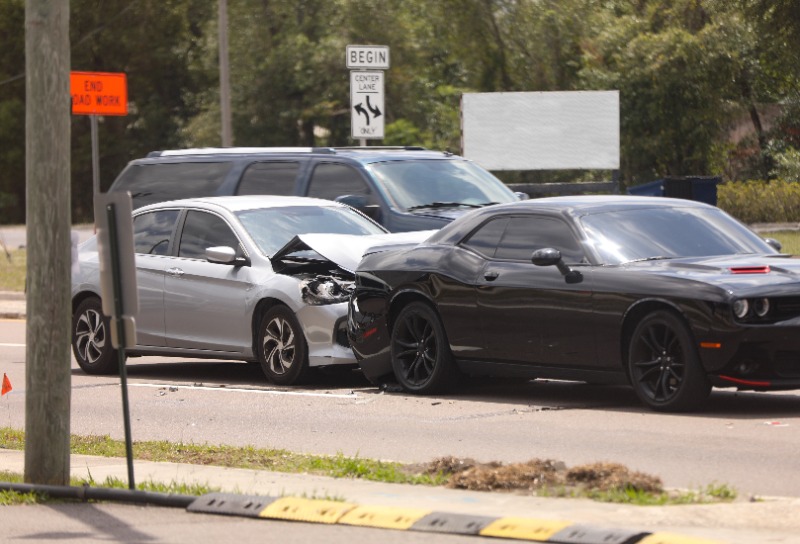
One of the most dangerous assumptions after a Virginia car accident sounds perfectly reasonable: the insurance company will sort out what happened. But when drivers offer competing accounts, the version supported by the strongest evidence usually carries the most weight. In other words, compelling supportive evidence is key to proving fault.
Understanding how to prove you are not at fault in a car accident starts with preserving photographs, witness information, vehicle damage, video footage, medical records, and other details that show how the collision occurred. Proof that someone else caused the crash is also particularly important in Virginia because under Virginia’s pure contributory negligence rule, an injured driver who shares responsibility for causing the crash generally cannot recover damages.
Tavss Fletcher helps clients across Southeast Virginia and Northeastern North Carolina gather evidence, challenge unfair blame, and protect personal injury claims before important details disappear. Since 1978, the firm has paired personal service with practical, collaborative advocacy. Involving an attorney early can help preserve evidence that may establish what actually happened. Contact Tavss Fletcher to get started.
How to Prove You Are Not at Fault in a Car Accident: Key Takeaways
Insurance companies don’t simply sort out who was at fault, the evidence does. Here’s what matters most if you need to prove you are not at fault in a car accident.
Key Takeaways
- The strongest evidence connects vehicle damage, traffic controls, and each driver’s movements into a sequence that can be independently verified, not just a single photo or witness.
- Under Virginia’s pure contributory negligence rule, sharing even a small percentage of fault can bar you from recovering any compensation, which makes strong evidence essential.
- Common mistakes like apologizing at the scene, skipping medical care, or giving a recorded statement to an insurer before understanding your rights can all undermine an otherwise strong claim.
- Acting quickly to document the scene, seek medical care, and preserve records gives you the best chance of building a credible record before evidence disappears.
How to Prove You Are “Not at Fault” in Car Accident Cases: An Overview
Proving you did not cause a collision rarely comes down to a single photograph, witness, or police report. Instead, insurers, attorneys, and, if necessary, a jury evaluate the complete picture. They compare physical evidence with witness testimony, examine the damage to each vehicle, review available video footage, and determine whether the facts support one driver’s account over another’s.
To prove you are not at fault in a car accident, the goal is straightforward: preserve credible evidence that demonstrates what happened before, during, and immediately after the crash. The sooner you begin gathering that information, the less opportunity there may be for:
- Memories to fade,
- Evidence to disappear, or
- Another driver to reshape the narrative.
The sections below explain the types of evidence that carry the most weight, common mistakes that can undermine a claim, and the steps you can take to strengthen your position after a Virginia car accident.
What Tips Help to Prove You Are Not at Fault in a Car Accident?
The strongest evidence does more than show that a crash happened. It explains how each driver moved, which traffic rule governed the encounter, and why the other motorist caused the collision. When you need to understand how to prove you are not at fault in a car accident, focus on details that test both accounts against objective facts:
- Match damage to movement—compare the location, height, and angle of impact on each vehicle with the direction both drivers claim they traveled;
- Document the traffic controls—record lane-use arrows, turn restrictions, yield signs, signal timing, merge markings, and any obstructed signage that shaped the right of way;
- Trace the approach—identify where each vehicle entered the roadway, changed lanes, turned, accelerated, or stopped before the impact;
- Look beyond eyewitnesses—check nearby homes, businesses, transit vehicles, parking facilities, and intersections for cameras that may have captured the collision or either driver’s approach; and
- Test the other account—compare the motorist’s statements with photographs, vehicle damage, road design, electronic data, and later versions of events given to police or insurers.
These details help transform competing stories into a sequence that someone can independently verify. At Tavss Fletcher, we can locate overlooked footage, inspect the vehicles, compare physical evidence with driver statements, and consult reconstruction experts when the mechanics of the collision remain disputed. A collection of small, consistent facts can expose weaknesses in the other driver’s account and make your own far harder to dismiss.
Car Accident When Not at Fault: Common Slip-Ups That Can Undermine Your Claim
Even when another driver clearly caused the collision, your actions afterward can make it more difficult to prove fault. To protect a car accident claim, avoid these common mistakes:
- Admitting blame—avoid apologizing for the collision or speculating about what caused it before all the facts are known;
- Leaving too soon—remain at the scene and comply with Virginia’s requirements to exchange information and report the accident when applicable;
- Skipping medical care—seek a medical evaluation promptly, even if your injuries initially seem minor, because delays can raise questions about the extent or cause of your injuries;
- Ignoring evidence—take photographs, gather witness information, and preserve available electronic records before they disappear; and
- Speaking carelessly with insurers—provide accurate facts, but avoid guessing, exaggerating, or giving a recorded statement before understanding your legal rights.
One mistake does not automatically defeat a claim. Strong evidence can often overcome an early misstep. However, the fewer opportunities you give an insurance company to question your credibility, the easier it becomes to demonstrate what actually happened and why another driver bears responsibility.
What Steps Can I Take to Strengthen My Position After a Virginia Car Accident?
Taking a few deliberate steps early may strengthen your position if insurers contest fault.
- Call law enforcement—report the collision when required and cooperate with the responding officer without guessing or assigning blame;
- Document everything—photograph the vehicles, roadway, traffic controls, weather conditions, visible injuries, and anything else that may help explain how the collision occurred;
- Seek prompt medical care—follow through with recommended treatment, and keep records of every appointment, diagnosis, and expense;
- Preserve important records—save repair estimates, towing receipts, medical bills, photographs, videos, and all correspondence related to the crash; and
- Speak with a personal injury attorney—an attorney can protect evidence, communicate with insurance companies, investigate disputed facts, and build a case supported by objective proof.
These steps cannot guarantee a favorable outcome, but they can help create a clearer, more credible record of the collision. The stronger the record is, the more difficult it is for another driver or an insurance company to shift responsibility onto you.
Proving Fault After a Virginia Car Accident: Frequently Asked Questions
You prove fault by preserving evidence that shows how the crash actually happened, including photographs, witness information, vehicle damage, video footage, and traffic control details. The goal is to build a sequence of events that holds up against the other driver’s account.
Virginia follows a pure contributory negligence rule, meaning an injured driver who shares even a small percentage of fault for the crash generally cannot recover any damages. Strong evidence that shows you weren’t at fault is essential to protecting your claim.
Evidence that connects physical facts together carries the most weight, such as matching vehicle damage to each driver’s claimed direction, documenting traffic controls, and locating video footage from nearby homes, businesses, or intersections.
Apologizing or speculating about fault at the scene, leaving before exchanging information, delaying medical care, and giving a recorded statement to an insurer before understanding your rights can all make it harder to prove you weren’t at fault.
Report the collision when required, document the scene with photographs, seek prompt medical care, preserve records like repair estimates and medical bills, and speak with a personal injury attorney early so evidence can be protected before it disappears.
Talk to a Virginia Car Accident Attorney at Tavss Fletcher
Proving you did not cause a crash may require a careful reconstruction of the evidence, a direct challenge to the insurer’s assumptions, and an attorney who understands how the collision has altered the life you still need to live. Tavss Fletcher has built its reputation on thorough preparation, personal attention, and determined advocacy, earning recognition from Best Lawyers in America, Virginia Super Lawyers, Virginia Business Magazine’s Legal Elite, Richmond Magazine’s Top Virginia Lawyers, and Top Lawyers of Coastal Virginia.
Contact Tavss Fletcher to speak with our car accident attorneys who will take your account seriously, carefully investigate the circumstances of the crash, and work to protect your ability to pursue compensation under Virginia law.
Official Legal and Other Sources Used to Inform This Page
To ensure the accuracy and clarity of this page, we referenced official legal and other sources during the content development process:
- Va. Code § 46.2-371. Driver to give immediate notice of certain accidents.
- Va. Code § 46.2-894. Duty of driver to stop.
- Cornell Law School, Legal Information Institute, contributory negligence.